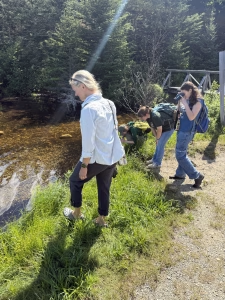
Thanks so much for joining us today! We had such a good time and it was so great to get to know so many good people. A special thanks to Mahoosuc Land Trust for all the work they do to steward this beautiful land. The land we explored today is on unceded Wabanaki territory, and we have so much gratitude to be remembering what our human animal bodies are designed for in these forests and rivers. Thanks also to some tracking club veterans for helping us scout and find some really fun stuff!
Donations
Donations are split between Mahoosuc Land Trust and the Northeast Wildlife Trackers Access Fund. From this paypal link you can donate by ach, credit card, paypal or venmo.
https://www.paypal.com/ncp/payment/JLU6RLK8EK5LW
Conditions were melted heavy snow, with a crust from a warm day yesterday and a cold one today. If you want to learn more about anything we encountered, here’s a species list of tracks and sign that we saw:
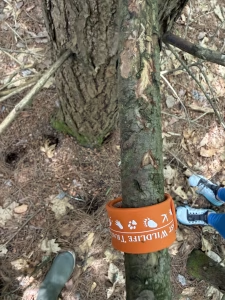
- Acorn Feeding Sign- We asked the ever-important question, whose face could do this? We discussed all the animals that feed on the mast of acorns including our big list of rodents, corvids, deer, bear, and more. We looked at specifics of telling the difference of species on the acorn and discussed the holes, the bevel, the context of where, and more.
- American Mink- With our list of Northeast Mustelids (Weasel Family) we looked at the size of tracks, trail width, the track pattern (2×2), consistency of trail stride, and the context of our location to determine this trail.

- Pileated Woodpecker- We discussed the critical role these dinosaur-of-birds play in our ecosystem. Creating many homes and temporary shelter. Also, access to food sources that other birds wouldn’t have. We also discussed other woodpeckers like the Yellow-Bellied Sapsucker (allowing the early migration of the hummingbird), the Downy, and the Hairy.
- We discussed Ansiodactyl vs. Zygodactyl and other feet type of birds.
- Squirrel (Red, Grey, Flying) – We (Maddie) found Squirrel Poop on a log! So much fun. We also discussed the possibility of it being Chipmunk because of the very warm day yesterday when chipmunks may come out of torpor. We discussed their homes in tall pine. Red Squirrels tend to be more aggressive territorially and you will see a lot of scratching and bit marks. The larger and gentler Gray Squirrel will chew enough to keep a hole open in a live tree, but doesn’t aggressively mark. Their holes tend to be slightly larger. Each species wanting to be just smaller than their hole to keep out larger predators and conserve heat. The flying squirrels tend to have entrances much higher in the trees and are nocturnal so we don’t have many sightings of this ubiquitous and ridiculously cute creature.


- Passerine Poop- A tiny white J-shaped scat on a red pine flake. Whose butt could do this? (picture anyone?)
- Eastern Coyote- We found a beautiful scat example of a coyote. Large, tapered, full of hair and meat.
- Gray Fox- We found a likely trail of a gray fox going right across the coyote scat. We also had the beautiful single track later which led to a discussion of the differences between Red Fox, Gray Fox, and Bobcat, looking at depth of track, furriness of foot, negative shaped space of H or X, presence of claws, and much more.

- White-Tailed Deer- A fun stumper of a question! The deer feeding on snow along the side of a trail. (Please send a picture along if you got one, we forgot to document). We learned from Caroline that Huskies do this while dog-sledding and they call it dipping. I think we have a new term for the tracking world! We had some exemplary deer beds, showing the fine attunement these social animals have to each other and the world around them. Not only does their urine smell magical, but they are yarding up this time of year to keep protected from the weather and opportunistic coyotes.

- Domestic Dog- We had plenty of dog tracks. These can be differentiated from wild canids by the ‘sloppy’ or unathletic foot compared to the tighter and fit feet of the wild brothers. Also, in good tracks like we saw in the parking lot you can see the blunt tips of the claws from trimming that you wouldn’t see in a wild coyote or fox.
Look forward to a free online winter tracking workshop in the next few weeks we are offering to tracking club participants!
Here are some resources if you’re interested:
App- iTrack Wildlife Pro
Websites-
https://lindajspielman.com/ (blog and a link to her book)
https://www.facebook.com/northeasttrackersconference/ (quiz yourself with mystery Mondays) or join the group and post your own questions.
Books-
Here’s a link to all the great books and buying from here supports Tracker Certification North America.
https://bookshop.org/shop/tcna
But a book not available there is Kathy Dean’s Mammal Behavior of New England Field Guide. If you want a copy let me know and I can get from the Author ($14.95).
Hope to see you on April 5th! Save your spot here: https://northernsonglines.com/mahoosuc-wildlife-tracking-club/